
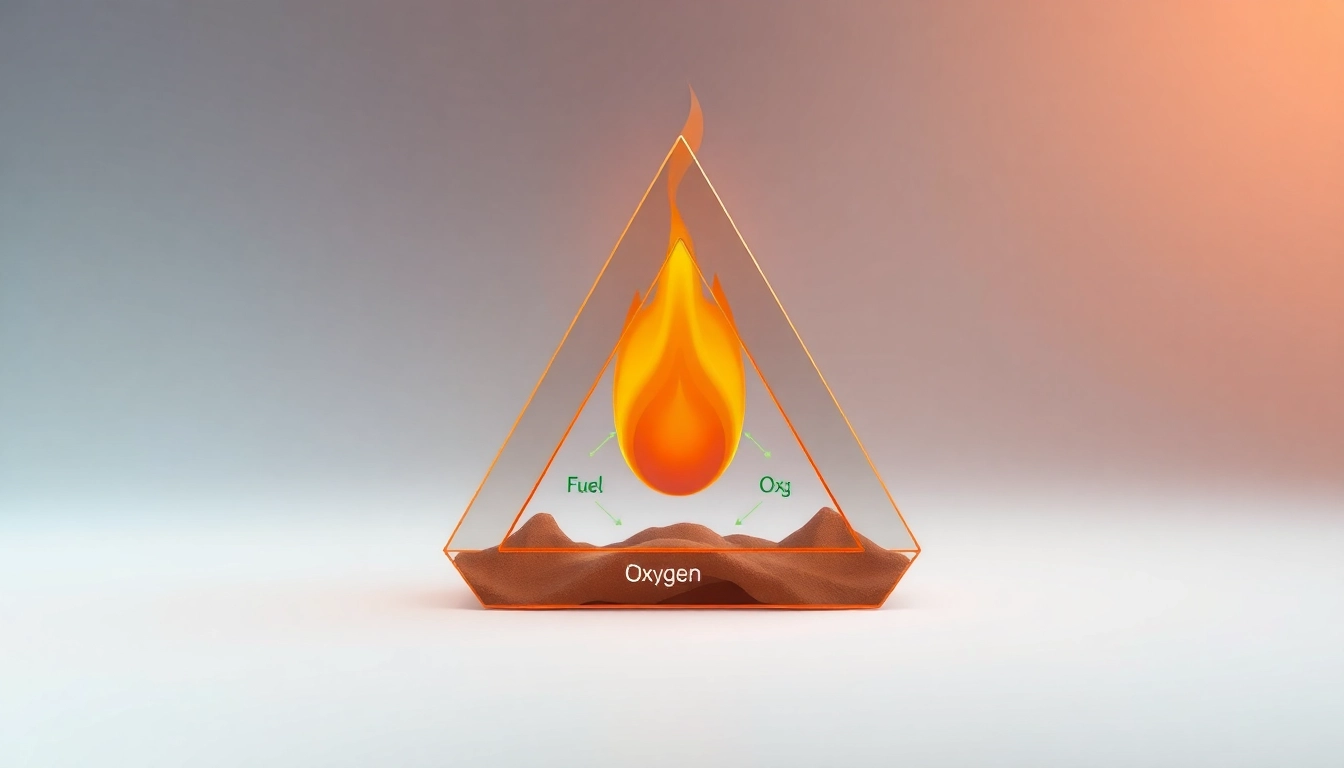
What is the Fire Tetrahedron?
The concept of the fire tetrahedron is a fundamental principle in fire science that expands on the earlier fire triangle model. While the fire triangle identifies three critical components necessary for combustion—fuel, heat, and oxygen—the fire tetrahedron introduces a fourth, crucial element: the chemical chain reaction. This expanded model provides a more comprehensive understanding of how fires ignite, sustain, and can be extinguished. Understanding this tetrahedral relationship is essential for fire safety professionals, educators, and anyone interested in fire prevention and management.
The Definition of Fire Tetrahedron
The fire tetrahedron is defined as a geometric representation illustrating the four elements required for a fire to ignite and propagate: fuel, heat, oxygen, and the chemical chain reaction. Each vertex of the tetrahedron represents one of these essential components. Without all four present, a fire cannot occur. This model serves as a vital framework for fire safety education and training, influencing how firefighters, safety professionals, and industries approach fire prevention and extinguishment tactics.
The Historical Context
The initial model, known as the fire triangle, was developed in the 19th century and focused on the three vital elements of fire. However, as scientific understanding of combustion progressed, it became clear that an additional aspect—the chemical chain reaction—was critical to the fire’s lifecycle. This recognition led to the development of the fire tetrahedron in the late 20th century, allowing fire professionals to better understand not just how to start a fire but also how to effectively extinguish and control it.
Importance in Fire Science
The fire tetrahedron’s significance in fire science cannot be overstated. It encapsulates the principle that removal of any one of the four elements can halt a fire, thereby enhancing fire safety strategies. This model enhances fire investigations, safety protocols in commercial settings, and training programs for firefighters. Its application spans across various industries, making it crucial for ensuring public safety.
Components of the Fire Tetrahedron
Understanding Fuel in Fire
Fuel serves as the foundational component of the fire tetrahedron. It can take various forms, including solids (like wood or paper), liquids (such as gasoline or ethanol), and gases (like propane or natural gas). The characteristics of the fuel, including its ignitability, combustion temperature, and volatility, significantly influence how a fire behaves. An understanding of the fuel types commonly encountered in different environments is essential for effective fire risk assessment and management.
The Role of Heat in Ignition
Heat is another crucial element of the fire tetrahedron. It serves as the energy source that raises the temperature of the fuel to its ignition point. Heat can come from various sources, including flames, electrical sparks, friction, and chemical reactions. Understanding the methods of heat transfer—conduction, convection, and radiation—enables professionals to develop improved fire suppression techniques and better safety measures to prevent fire outbreaks.
Oxygen’s Necessity for Fire
Oxygen, often derived from the air, is vital for combustion. Fire typically requires oxygen levels of at least 16% to sustain itself, although 21% is the average concentration in the atmosphere. Understanding how to manipulate oxygen levels can influence fire suppression tactics, such as using inert gases or fire extinguishing agents that displace oxygen to smother flames effectively. Knowledge of oxygen’s role is essential for both fighting fires and creating fire-safe environments.
The Chemical Chain Reaction Explained
Defining the Chemical Reaction
The chemical chain reaction refers to the series of reactions that occur after initial ignition, allowing a fire to sustain itself. This complex sequence is triggered when fuel vapor combines with oxygen in a reaction that releases energy, producing heat and light. Understanding this reaction is crucial, as it reveals how fires can spread and grow rapidly once ignited.
How It Interacts with Other Components
The chemical chain reaction interacts closely with the other three components of the fire tetrahedron. For instance, increasing heat can accelerate the reaction, while the presence of more fuel and oxygen leads to a more vigorous fire. Conversely, disrupting this reaction through methods such as cooling, smothering, or starving can extinguish a fire. This interaction underlines the importance of comprehensive fire strategy development that considers all components.
Significance in Fire Management
Understanding the chemical chain reaction enhances fire management practices by providing insight into fire behavior. It assists firefighters in anticipating fire spread patterns and adjusting suppression strategies accordingly. Knowledge of this reaction is also crucial in developing firefighting equipment and chemicals that specifically target the chain reaction, improving efficiency in fire control efforts and enhancing safety for both personnel and property.
Comparing Fire Tetrahedron and Fire Triangle
Main Differences Explained
While both the fire triangle and fire tetrahedron serve to explain vital concepts in fire behavior, their primary difference lies in the addition of the chemical chain reaction in the tetrahedron model. The fire triangle only addresses three elements—fuel, heat, and oxygen—leaving out the vital role of the chemical reaction, which is essential for understanding how fires propagate after ignition. This enhanced model provides a more robust framework for fire prevention and control.
How Each Model Affects Safety Practices
The adoption of the fire tetrahedron over the fire triangle in training and safety practices emphasizes the complexities of fire behavior. This shift encourages more comprehensive fire safety audits, improved response strategies, and educates stakeholders about the multifaceted nature of combustion. By understanding all four elements, organizations and individuals can develop more effective risk management practices.
When to Use Each Model
The fire triangle may still be useful in basic educational settings, providing a simple visual of how fires ignite. However, for more advanced discussions involving fire dynamics, safety planning, and suppression techniques, the fire tetrahedron is indispensable. Fire safety training should thus prioritize the tetrahedron model to arm learners with a comprehensive understanding of fire behavior.
FAQs About the Fire Tetrahedron
What are the 4 elements of the fire tetrahedron?
The four essential elements of the fire tetrahedron are fuel, heat, oxygen, and the chemical chain reaction. Each plays a critical role in the ignition and sustainability of a fire.
What is the difference between fire triangle and fire tetrahedron?
The fire tetrahedron includes a vital fourth component—the chemical chain reaction—while the fire triangle only accounts for fuel, heat, and oxygen. This makes the tetrahedron more comprehensive for fire science.
What are the four fire tetrahedrons?
The fire tetrahedron consists of four components: fuel, heat, oxygen, and the chemical chain reaction, each is necessary for a fire to ignite and continue burning.
What are the 3 P’s of fire?
The three P’s of fire are: Prevention, Protection, and Preparation. These principles are strategies to reduce fire risks and enhance safety in various environments.
Are there practical examples of the fire tetrahedron?
Practical examples include how firefighters utilize the tetrahedron to extinguish fires by removing heat (cooling), fuel (smothering), or oxygen (displacing) based on the combustion scenario they face.