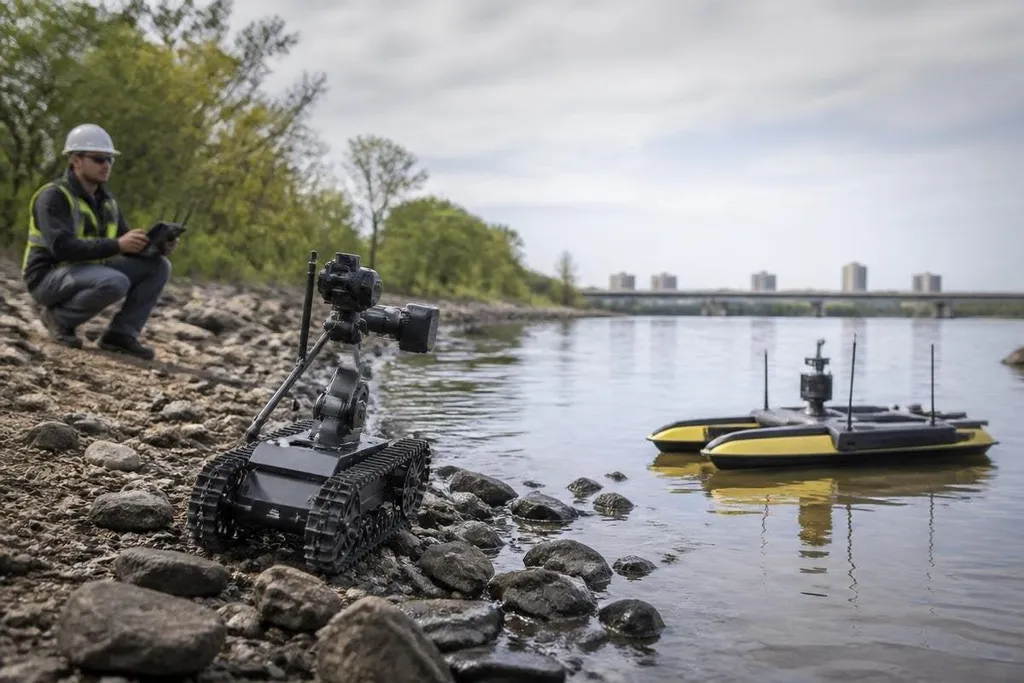
Environmental robots take on work that is slow, risky, or hard to repeat by hand. They can inspect water, map damaged land, remove waste, and collect readings from places where people should spend less time.
Quick read
- Robots gather field data without sending people into unsafe areas.
- Small machines can inspect soil, pipes, shorelines, and animal habitats.
- Their value depends on useful data, safe operation, and a clear plan for repair.
Finding pollution sooner
Cameras, water sensors, or air sensors let a robot check an area and send back measurements. The machine may travel across a river, roll through a drain, or fly above land while recording conditions along its route.
That work helps teams see where a problem starts. A water robot that finds a change in temperature, acidity, or dissolved oxygen can point inspectors toward a site that needs closer testing. The robot does not replace lab work, but it can help people choose where to take samples.
The same approach works on land. On land, a ground robot can move through a site after a spill and record images from several points. From above, a drone can map the affected area. The useful result is a record that people can compare over time, provided the sensors are checked and the route stays consistent.
Working in places people should avoid
Some environmental jobs expose workers to unstable ground, polluted water, smoke, or steep slopes. Remote operation lets a person guide the robot from a safer location while the machine handles the first inspection.
Autonomous systems can also repeat a route without asking a person to walk the same path each time. In robotics, autonomy means the machine makes some movement decisions from its sensors. A human still sets the task, checks the results, and steps in when the robot meets something it cannot handle.
This matters during flood checks, mine surveys, and inspections of damaged industrial sites. A robot can carry a camera into a narrow space, but its usefulness ends if its battery, radio link, or wheels fail before the inspection is complete.
Supporting wildlife and habitat work
Environmental robots can collect information without bringing large groups of people into a sensitive area. A mobile platform with a camera trap, an underwater vehicle, or a small aerial robot may observe a habitat while keeping people farther away.
The machine still needs careful limits. Noise can disturb animals, and lights or moving parts can change their behavior. Gathering more images is a poor result if the robot drives animals away.
Data quality matters too. Cameras need a known position, sensor readings need checks, and teams need a clear way to label what the robot records. Without that process, a large collection of images can create more sorting work than useful evidence.
A robot that sorts clean samples in a lab still has to handle mixed waste and dirty sensors in the field. Robot24.com robotics coverage can place its task, site, and test date beside the reported result, giving you a better basis to judge the machine before the section turns to cleaning waste and damaged sites.
Cleaning waste and damaged sites
Robots can sort, collect, or move waste when the job suits their size and tools. On a conveyor, a robot arm may separate materials. Across rough ground, a tracked machine may gather debris. An underwater robot may inspect objects that divers cannot reach safely.
The environmental gain depends on the full system around the robot. Sorting only helps if the recovered material has a buyer or a reuse route.
Collecting waste only helps if the machine uses less energy and creates less pollution than the work it replaces.
That is why a robot's power source, travel distance, repair needs, and end-of-life plan belong in the same review as its camera or gripper. A machine can do a clean job while still carrying a large cost in batteries, transport, or discarded parts.
A practical check before buying or deploying one
Use this list before a pilot or field job:
- Name the task: Write down the area, material, hazard, and result the robot must produce.
- Check the sensor: Confirm the reading you need, its range, and how a person will verify it.
- Plan the route: Mark launch points, obstacles, radio limits, and places where a person must take control.
- Count the support work: Include charging, cleaning, data review, software updates, and repairs.
- Set a stop rule: Decide when the team will pause the robot because of weather, damage, or unsafe readings.
- Measure the replacement: Compare the robot with the current method for time, energy, worker exposure, and data quality.
I'd fund an environmental robot only when the team can explain what decision its data will change. A machine that gathers images without a defined use is another device to power, move, and maintain.
The next useful step is a small field trial with a fixed route, a known sensor check, and a human review of every result before the system takes on more ground.